the best high protein foods
If you are just starting to increase your protein intake you may have fallen into a rut with consuming the same types of protein chicken…chicken...and more chicken. There are however, a wide variety of foods that offer lean high protein content that are both animal proteins and plant-based proteins. The following chart provides a starting point for building protein focused meals utilizing a variety of sources.
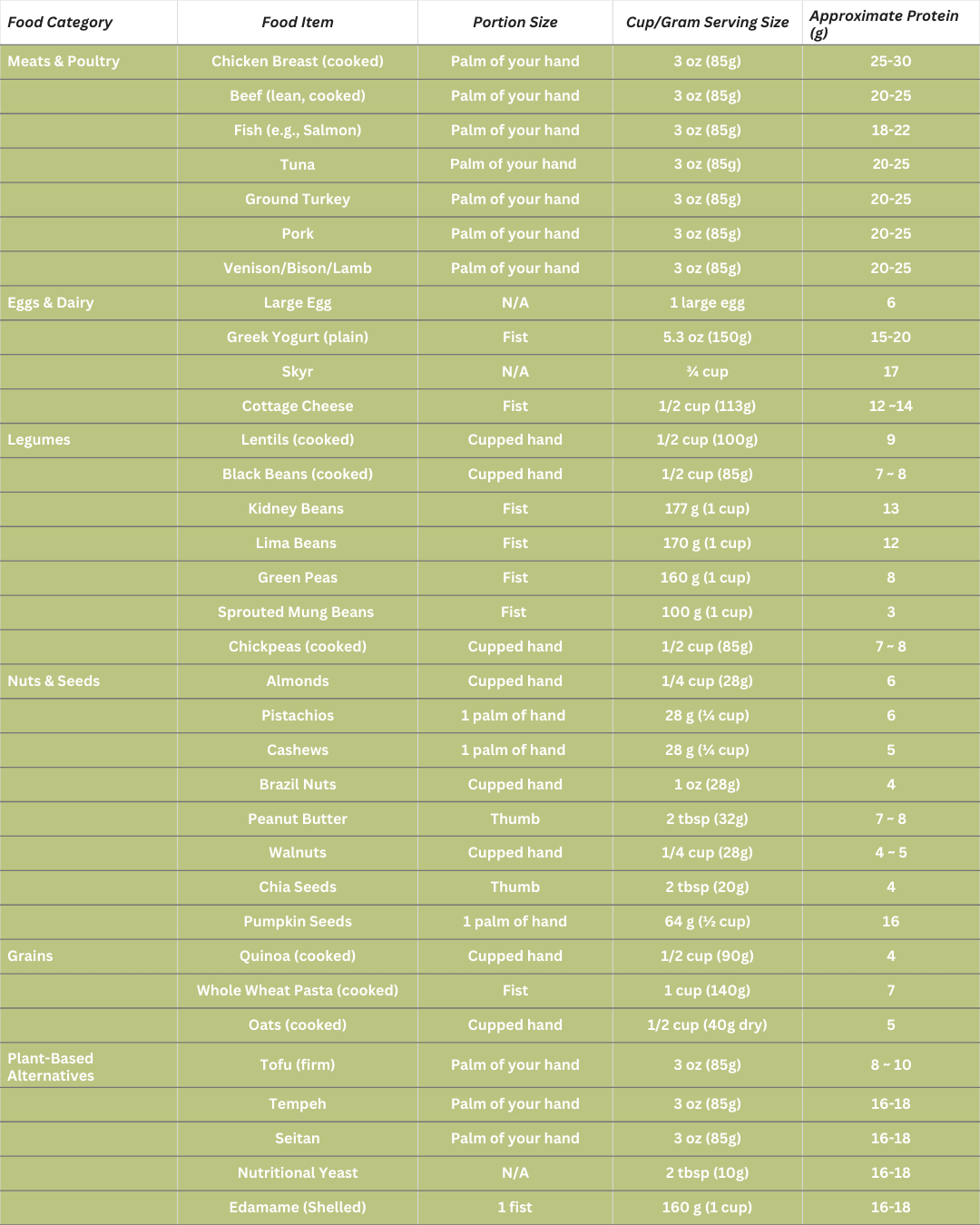
You will notice that not all of the foods in this chart are highly concentrated with protein, like the grains. The reason for there inclusion is to provide additional protein rich foods within meals that aid in creating a balanced plate while sprinkling extra protein into your meals. In no way am I encouraging you to eat 100 grams of protein with oats (that would be 10 cups of oatmeal) and imbalance your macro needs. You may also have noted that there are ranges for grams of protein for certain food items. This is either due to the variability within brands(like for Greek yogurt) or in the case of meats the variability in composition. Meats are not strictly composed of protein, there are minerals, water, and fat which is why there are these ranges for protein composition. Utilizing a variety of protein sources to hit your protein needs decreases flavor fatigue and including a wider profile of nutrients.
How can you tell if packaged foods are a good source of protein?
When determining whether or not a packaged food item is a good source of protein, you want to look at the nutrition fact label and aim for at least 10-20 grams of protein per serving. This helps to ensure the food meaningfully contributes to your daily protein needs and supports satiety, muscle maintenance, and blood sugar stability. Research shows that 20-30 grams of protein per meal maximally stimulates muscle protein synthesis for most adults, so a packaged food with 10-20 grams can reasonably support a meal or snack rather then being just a trace source. Be mindful when selecting packaged foods of the sodium (salt) and added sugar, as these are items we want to limit in our diet.
References:
Moore, D. R., Robinson, M. J., Fry, J. L., Tang, J. E., Glover, E. I., Wilkinson, S. B., Prior, T., Tarnopolsky, M. A., & Phillips, S. M. (2009). Ingested protein dose response of muscle and albumin protein synthesis after resistance exercise in young men. The American Journal of Clinical Nutrition, 89(1), 161–168. https://doi.org/10.3945/ajcn.2008.26401
Witard, O. C., Jackman, S. R., Breen, L., Smith, K., Selby, A., & Tipton, K. D. (2014). Myofibrillar muscle protein synthesis rates subsequent to a meal in response to increasing doses of whey protein at rest and after resistance exercise. The American Journal of Clinical Nutrition, 99(1), 86–95. https://doi.org/10.3945/ajcn.112.055517
Schoenfeld, B. J., & Aragon, A. A. (2018). How much protein can the body use in a single meal for muscle-building? Implications for daily protein distribution. Journal of the International Society of Sports Nutrition, 15(1), 10. https://doi.org/10.1186/s12970-018-0215-1
Morton, R. W., Murphy, K. T., McKellar, S. R., Schoenfeld, B. J., Henselmans, M., Helms, E., Aragon, A. A., Devries, M. C., Banfield, L., Krieger, J. W., & Phillips, S. M. (2018). A systematic review, meta-analysis and meta-regression of the effect of protein supplementation on resistance training–induced gains in muscle mass and strength in healthy adults. British Journal of Sports Medicine, 52(6), 376–384. https://doi.org/10.1136/bjsports-2017-097608
Mamerow, M. M., Mettler, J. A., English, K. L., Casperson, S. L., Arentson-Lantz, E., Sheffield-Moore, M., Layman, D. K., & Paddon-Jones, D. (2014). Dietary protein distribution positively influences 24-h muscle protein synthesis in healthy adults. The Journal of Nutrition, 144(6), 876–880.https://doi.org/10.3945/jn.113.185280
