Remedy or Myth? The Science Behind Home Remedies — Part 1
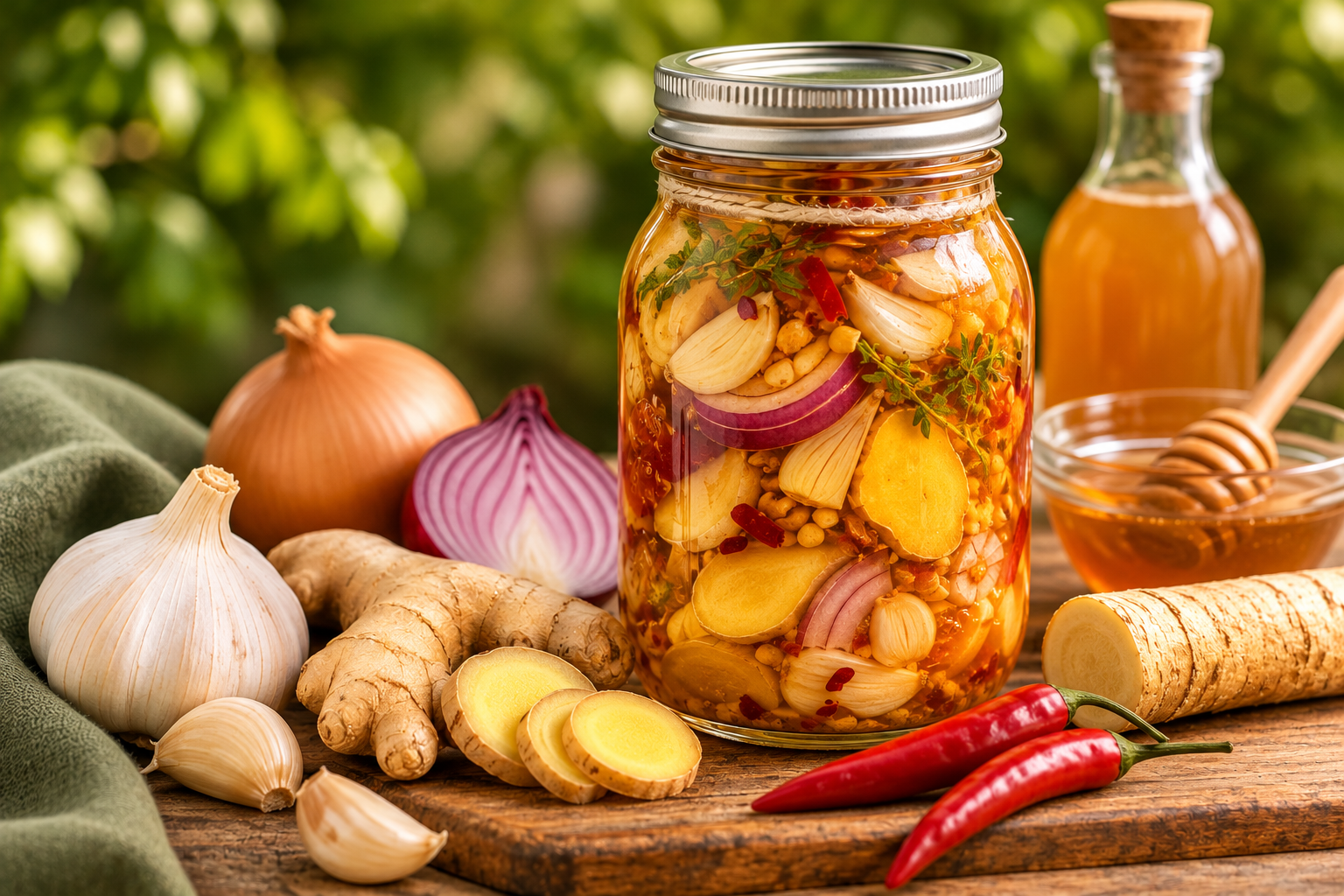
When cold and flu season arrives, many people turn to home remedies that have been passed down through generations. One increasingly popular option is fire cider, a spicy mixture of apple cider vinegar, garlic, ginger, horseradish, onions, and sometimes turmeric, cayenne pepper, and honey.
Supporters claim it can strengthen immunity, fight infections, and shorten the duration of a cold.
But does fire cider actually work? And is it safe for everyone?
Let's take a closer look at what the research says.
What Is Fire Cider?
Fire cider is an herbal preparation made by soaking vegetables, herbs, and spices in vinegar, usually for several weeks.
Recipes vary considerably. Some contain honey, while others include additional ingredients such as citrus fruits or hot peppers.
This variation matters because the amount of each potentially active compound can differ from one preparation to another.
More importantly, research on individual ingredients cannot establish that the finished fire cider mixture is effective.
Garlic: Does It Fight Colds?
Garlic has a long history of use in traditional medicine, particularly for fighting infections and supporting immune health. Much of this interest comes from its sulfur-containing compounds, including allicin, which is produced when garlic is chopped or crushed. Research has shown that these compounds can inhibit certain bacteria and viruses under laboratory conditions, raising questions about whether garlic could offer similar benefits when consumed.
But what happens when researchers study garlic in humans?
A Cochrane systematic review investigated garlic's ability to prevent or treat the common cold. Interestingly, only one randomized controlled trial involving 146 participants met the review's criteria. Participants taking a daily garlic supplement experienced fewer colds than those receiving a placebo. While these findings were encouraging, a single study is not enough to confidently establish garlic's effectiveness. Researchers also found insufficient evidence that garlic could shorten the duration of a cold once symptoms had developed (Lissiman et al., 2014).
Another important consideration is how garlic is consumed. The amount of allicin and other active compounds can vary depending on preparation, cooking methods, and whether garlic is consumed as food or a concentrated supplement. This makes it difficult to apply findings from supplement research to homemade preparations like fire cider.
The takeaway: Garlic is a nutritious and flavorful ingredient with some intriguing scientific findings, but the evidence supporting its use as a cold remedy remains limited. While adding garlic to meals can contribute to a balanced diet, consuming larger amounts or taking supplements has not been reliably shown to prevent illness or speed up recovery.
Ginger: Helpful for Illness?
Ginger has been used for centuries as a traditional remedy for nausea, digestive discomfort, and symptoms associated with colds. It contains naturally occurring compounds called gingerols and shogaols, which have demonstrated antioxidant and anti-inflammatory properties in laboratory studies. These compounds may help influence inflammatory pathways in the body, although laboratory findings do not always translate into meaningful health benefits in humans.
Clinical research has shown that ginger may be helpful for certain types of nausea, particularly pregnancy-related nausea. However, there is currently insufficient clinical evidence to conclude that ginger prevents respiratory infections, strengthens immune defenses, or shortens the duration of a cold or flu (NCCIH, n.d.-b).
Interestingly, some laboratory studies have explored ginger's potential antiviral activity, but these findings have not established that consuming ginger can treat viral infections in humans.
The takeaway: While ginger isn't a proven treatment for colds or influenza, it can still provide comfort when you're feeling unwell. A warm cup of ginger tea may help soothe an irritated throat, support hydration, and ease nausea. Just remember that feeling better doesn't necessarily mean the underlying infection is resolving faster.
Honey: A More Promising Ingredient?

Unlike many traditional home remedies, honey has a growing body of clinical research supporting its use for relieving certain symptoms of respiratory infections, particularly coughing. But what makes honey potentially helpful?
Honey's thick, smooth consistency may help coat and soothe an irritated throat, temporarily reducing the discomfort that often accompanies a cold. Researchers have also investigated its antimicrobial and anti-inflammatory properties, although these laboratory findings do not necessarily mean that eating honey can fight an infection.
A systematic review and meta-analysis by Abuelgasim et al. (2021) examined honey's effectiveness for relieving symptoms of upper respiratory tract infections. Researchers found that honey may help reduce cough frequency and severity compared with some usual care treatments, although the quality of evidence and results varied across studies.
These findings are encouraging, particularly because persistent coughing can interfere with sleep and overall comfort during illness. However, it's important to distinguish between managing symptoms and treating the underlying infection. Honey may make a cough more manageable, but there is no convincing evidence that it eliminates respiratory viruses or consistently shortens the duration of an illness.
Apple Cider Vinegar: Does It Kill Germs?
Apple cider vinegar has gained popularity as a natural remedy for everything from digestive health to blood sugar management and immune support. As the main ingredient in fire cider, it is often credited with helping the mixture fight infections. But does its reputation as a natural antimicrobial hold up when we look at the science?
Apple cider vinegar is produced through fermentation, a process that converts sugars from apples into alcohol and eventually into acetic acid, the compound responsible for vinegar's distinctive sour taste and acidity. Acetic acid has demonstrated antimicrobial activity in laboratory studies, where it can inhibit the growth of certain bacteria and other microorganisms under specific conditions.
However, there is an important distinction between using vinegar to inhibit microorganisms in a laboratory and drinking vinegar to fight an infection inside the body. The concentration of acetic acid, duration of exposure, and surrounding environment all influence its antimicrobial effects. When consumed, vinegar is diluted and processed through the digestive system. It does not reach the respiratory tract at concentrations known to kill viruses in laboratory experiments.
While some human studies have explored apple cider vinegar's potential effects on blood glucose regulation, these findings do not establish benefits for immune function or respiratory infections. Currently, there is no convincing clinical evidence that drinking apple cider vinegar prevents colds, eliminates respiratory viruses, or speeds up recovery from an infection.
It's also worth considering that vinegar's acidity may come with some drawbacks. Frequent consumption of concentrated vinegar can irritate the throat, worsen acid reflux, and contribute to dental enamel erosion. These concerns are particularly relevant when vinegar-based remedies are consumed regularly or in large amounts.
The takeaway: Apple cider vinegar may have useful antimicrobial properties in certain settings, but that doesn't make it an effective treatment for infections within the body. While it can add flavor to foods and homemade preparations like fire cider, there is currently insufficient evidence to support drinking it as a remedy for colds or influenza.
Does Combining These Ingredients Make Fire Cider More Effective?
With ingredients like garlic, ginger, honey, and apple cider vinegar each having their own potential health benefits, it's reasonable to wonder whether combining them creates an even more powerful remedy.
The idea that ingredients may work together to enhance their effects is known as synergy. While this is possible in certain circumstances, combining ingredients doesn't automatically make them more effective. The amount of each ingredient, how it's prepared, and how its active compounds interact can all influence the final product.
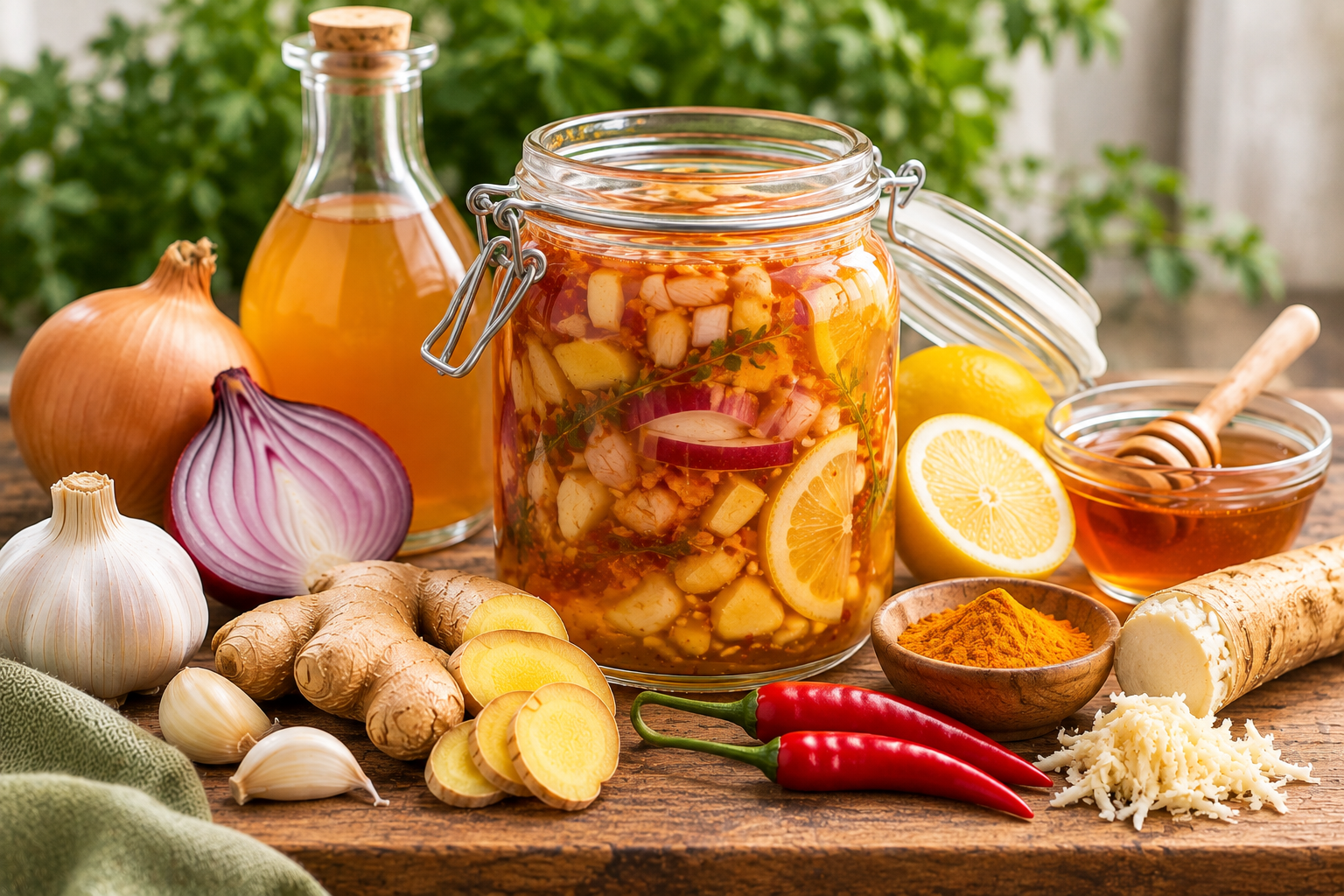
More importantly, research on individual ingredients cannot tell us whether fire cider as a whole is effective. Currently, high-quality randomized controlled trials evaluating fire cider for preventing or treating respiratory infections are lacking.
The takeaway: Fire cider may contain ingredients with promising properties, but there is insufficient scientific evidence that combining them strengthens immune defenses, prevents illness, or speeds up recovery. Until more research is available, fire cider is best viewed as a flavorful food preparation rather than a proven medicinal treatment.
Potential Safety Risks
Although fire cider is made from familiar foods, concentrated preparations can still cause problems.
Acid reflux and gastrointestinal discomfort: Vinegar, hot peppers, and garlic may worsen heartburn, nausea, or stomach irritation.
Dental enamel erosion: Frequent exposure to acidic preparations can damage tooth enamel.
Medication interactions: Concentrated garlic supplements may increase bleeding risk, particularly with anticoagulant or antiplatelet medications (NCCIH, n.d.-a).
Pregnancy and breastfeeding: Medicinal amounts of herbal ingredients have not necessarily been established as safe.
Food safety: Homemade vinegar infusions require appropriate preparation and storage to reduce contamination risks.
Allergic reactions: Any ingredient may cause a reaction in susceptible individuals.
People with chronic kidney disease, gastrointestinal disorders, or complex medication regimens should seek individualized guidance before using concentrated preparations.
The Verdict: Is Fire Cider Worth Trying?
Evidence rating: Little evidence of benefit for treating infections.
Fire cider can be enjoyed as a flavorful food preparation if its ingredients are tolerated, but there is insufficient evidence to recommend it as a treatment for colds or influenza.
Some individual ingredients, particularly honey, may offer symptom relief.
The Bottom Line
A remedy doesn't have to cure an illness to provide comfort. However, it's important to distinguish between feeling better and actually shortening the course of an infection.
Fire cider has not been shown to do the latter.
Before trying fire cider or any new herbal remedy, discuss it with your physician or another qualified healthcare professional, particularly if you take medications, have an existing medical condition, or are pregnant or breastfeeding.
References
Abuelgasim, H., Albury, C., & Lee, J. (2021). Effectiveness of honey for symptomatic relief in upper respiratory tract infections: A systematic review and meta-analysis. BMJ Evidence-Based Medicine, 26(2), 57–64. https://doi.org/10.1136/bmjebm-2020-111336
Lissiman, E., Bhasale, A. L., & Cohen, M. (2014). Garlic for the common cold. Cochrane Database of Systematic Reviews, 2014(11), Article CD006206. https://doi.org/10.1002/14651858.CD006206.pub4
National Center for Complementary and Integrative Health. (n.d.-a). Garlic: Usefulness and safety. National Institutes of Health. https://www.nccih.nih.gov/health/garlic
National Center for Complementary and Integrative Health. (n.d.-b). Ginger: Usefulness and safety. National Institutes of Health. https://www.nccih.nih.gov/health/ginger
This article is intended for educational purposes and does not replace individualized medical advice, diagnosis, or treatment.
