12 Healthy Fall Foods to Add to Your Grocery List This Season
When the temperatures start dropping and the leaves begin changing, our meals tend to change too. Crisp salads and summer berries may give way to warm soups, roasted vegetables, hearty grain bowls, and comforting fall flavors.
The good news? Fall brings an abundance of nutritious foods that make it easy to add more fiber, vitamins, minerals, antioxidants, and plant variety to your meals.
Eating seasonally doesn't mean you have to completely change your diet when autumn arrives. Instead, think of it as an opportunity to add variety.
So, the next time you're heading to the grocery store or farmers market, consider adding some of these healthy fall foods to your cart.
1. Apples
It wouldn't be fall without apples.
Apples are an easy, portable source of carbohydrates, fiber, vitamin C, and a variety of polyphenols (plant compounds that act as antioxidants and may help protect cells). Much of an apple's fiber and phytochemicals (natural compounds in plants that may help support health) are found in or near the peel, making eating the whole fruit an easy way to get the most from it.
Research examining apple consumption has explored potential benefits related to cholesterol, blood glucose regulation, vascular function, inflammation, and other cardiometabolic markers.
Easy ways to eat more apples:
Pair sliced apples with peanut or almond butter.
Dice apples into oatmeal.
Add apples to a fall salad with walnuts and goat cheese.
Bake apples with cinnamon for a simple dessert.
Pair an apple with cheese for a satisfying snack.
Dietitian tip: Fruit doesn't need to be eaten by itself. Pairing fruit with a source of protein or fat can create a more filling and satisfying snack.
2. Pumpkin
Pumpkin deserves to be used for more than pumpkin pie and pumpkin spice lattes.
Its orange color comes partly from its abundance of carotenoids, including beta-carotene, alpha-carotene, lutein, and zeaxanthin. Beta-carotene can be converted by the body into vitamin A, an essential nutrient involved in immune function, vision, and normal cell growth.
And canned pumpkin counts!
Just look for 100% pure pumpkin rather than pumpkin pie filling, which contains additional ingredients such as sugar and spices.
Try pumpkin in:
Oatmeal
Smoothies
Chili
Soups
Pancakes
Muffins
Yogurt
Pasta sauces
Don't forget about pumpkin seeds, either. They provide plant-based protein, healthy fats, magnesium, zinc, and other nutrients.
3. Sweet Potatoes
Sweet potatoes are another nutrient-dense fall staple.
Orange-fleshed sweet potatoes are particularly rich in beta-carotene. They're also a source of fiber, potassium, vitamin C, and carbohydrates, making them a great addition to meals, especially for active individuals who need carbohydrates to fuel activity.
And despite the name, sweet potatoes don't have to be prepared sweet.
Savory sweet potato ideas:
Try roasting cubed sweet potatoes with olive oil, garlic, paprika, salt, and pepper.
You can also add them to:
Breakfast hashes
Grain bowls
Tacos
Chili
Soups
Sheet-pan dinners
Pair them with chicken, fish, tofu, beans, eggs, or another protein source to build a balanced meal.
4. Brussels Sprouts
Brussels sprouts belong to the cruciferous vegetable family alongside broccoli, cauliflower, cabbage, and kale.
Cruciferous vegetables contain naturally occurring compounds called glucosinolates. When these compounds are broken down, they produce biologically active compounds such as isothiocyanates and indoles that researchers continue to study for their potential roles in supporting health.
Brussels sprouts also provide fiber, vitamin C, vitamin K, folate, and other micronutrients.
If your memories of Brussels sprouts involve soggy boiled vegetables, give them another chance.
Try them:
Cut Brussels sprouts in half, toss them with olive oil and seasonings, and roast them until the edges become crispy.
They're also delicious paired with:
Balsamic vinegar
Parmesan
Garlic
Pecans or walnuts
Dried cranberries
Dijon mustard
5. Winter Squash
Butternut, acorn, delicata, spaghetti, and other winter squash varieties become especially popular during the fall.
Winter squash provides carbohydrates and fiber along with nutrients such as potassium, vitamin C, and carotenoids. Different varieties offer slightly different nutritional profiles, which is another reason dietary variety can be beneficial.
Make winter squash easy:
Butternut squash: Roast it or blend it into soup.
Delicata squash: Slice and roast it, the skin is edible.
Spaghetti squash: Roast and shred the inside into spaghetti-like strands.
Acorn squash: Roast halves and stuff them with quinoa, vegetables, beans, turkey, or sausage.
Frozen pre-cut squash is also a great option when convenience matters.
6. Pears
Apples tend to receive most of the attention during fall, but pears deserve a spot on your grocery list too.
Pears provide fiber, vitamin C, potassium, and various plant compounds. Leaving the skin on provides additional fiber.
Pears can also work surprisingly well in savory dishes.
Try pears:
Sliced with cheese
With peanut or almond butter
Chopped into oatmeal
Added to salads
Baked with cinnamon
Paired with walnuts and Greek yogurt
A simple pear-and-cheese snack provides carbohydrates, fiber, protein, and fat, and takes almost no preparation.
7. Cranberries
Fresh cranberries start appearing in grocery stores as the holiday season approaches.
Cranberries contain several phytochemicals, including proanthocyanidins, which have been studied extensively for their potential role in urinary tract health.
A 2023 Cochrane systematic review including 50 randomized controlled trials found that cranberry products reduced the risk of symptomatic, culture-verified urinary tract infections in certain populations, including women with recurrent UTIs. Cranberries, however, should not be considered a treatment for an active UTI.
Fresh cranberries are naturally very tart, which is why many cranberry products contain substantial amounts of added sugar.
Try cranberries:
Add fresh or frozen cranberries to oatmeal.
Make homemade cranberry sauce with less added sugar.
Add dried cranberries to salads or trail mix.
Combine cranberries with apples when baking.
Add them to whole-grain muffins.
You don't need to avoid added sugar entirely, just remember that cranberry juice cocktails and sweetened dried cranberries can contain considerably more added sugar than the whole fruit.
8. Beets
Beets bring beautiful color and a unique nutrient profile to fall meals.
They provide fiber, folate, potassium, and naturally occurring dietary nitrates. Dietary nitrate can be converted in the body to nitric oxide, a molecule involved in blood vessel function and blood flow.
This has made beetroot particularly interesting in research examining cardiovascular health and exercise performance.
Make beets easier:
If preparing raw beets sounds like too much work, buy them:
Pre-cooked
Vacuum packed
Frozen
Canned
Try adding beets to salads with goat cheese, walnuts, greens, and balsamic dressing.
9. Broccoli and Cauliflower
Broccoli and cauliflower are incredibly versatile fall vegetables and members of the same cruciferous family as Brussels sprouts.
Along with fiber and numerous vitamins and minerals, these vegetables provide glucosinolates and other phytochemicals being investigated for their potential health effects.
One of the easiest ways to enjoy them is simply roasting them.
Toss broccoli or cauliflower with olive oil and your favorite seasonings and roast until browned and crispy.
You can also use them in:
Stir-fries
Soups
Pasta
Grain bowls
Sheet-pan meals
Curries
Remember: vegetables don't need to be steamed and plain to be "healthy." Seasonings, sauces, cheese, olive oil, and other additions can make vegetables more enjoyable, and enjoying your food matters.
10. Oats
Produce isn't the only food worth stocking up on this fall.
Oats are a whole grain containing beta-glucan, a type of soluble fiber that has been extensively studied for its effects on cholesterol and cardiovascular health.
They're also inexpensive, versatile, and perfect for cooler mornings.
Build a more balanced bowl of oatmeal:
Instead of eating oats alone, add a source of protein and fat.
For example:
Oats + milk + Greek yogurt + apples + walnuts + cinnamon
or
Oats + protein powder + pumpkin + peanut butter + pumpkin pie spice
Adding protein and fat can make your breakfast more satisfying while fruit adds additional fiber and nutrients.
11. Beans and Lentils
Fall is soup, stew, and chili season, which makes it a perfect time to eat more beans and lentils.
Legumes provide:
Fiber
Plant-based protein
Iron
Potassium
Folate
Magnesium
Complex carbohydrates
They are also inexpensive and shelf-stable.
Try adding black beans to chili, lentils to soup, chickpeas to grain bowls, or white beans to pasta dishes.
Canned beans are absolutely nutritious. Look for no added salt or reduced salt options to limit sodium intake. If unable to find lower sodium options, rinsing canned beans before using them can also reduce some of their sodium content.
12. Walnuts, Pecans, and Pumpkin Seeds
Nuts and seeds can add crunch, flavor, healthy fats, plant protein, fiber, vitamins, minerals, and phytochemicals to fall meals.
They're also an easy way to make a snack or meal more satisfying.
Try sprinkling them over:
Oatmeal
Yogurt
Salads
Roasted vegetables
Grain bowls
Or simply pair a handful with fruit for a quick snack.
Your Healthy Fall Grocery List
Ready to put it all together? Save this healthy fall grocery list for your next trip to the grocery store. You don’t need to buy everything, choose a few foods you enjoy and use the list as inspiration for adding more variety to your meals this season.
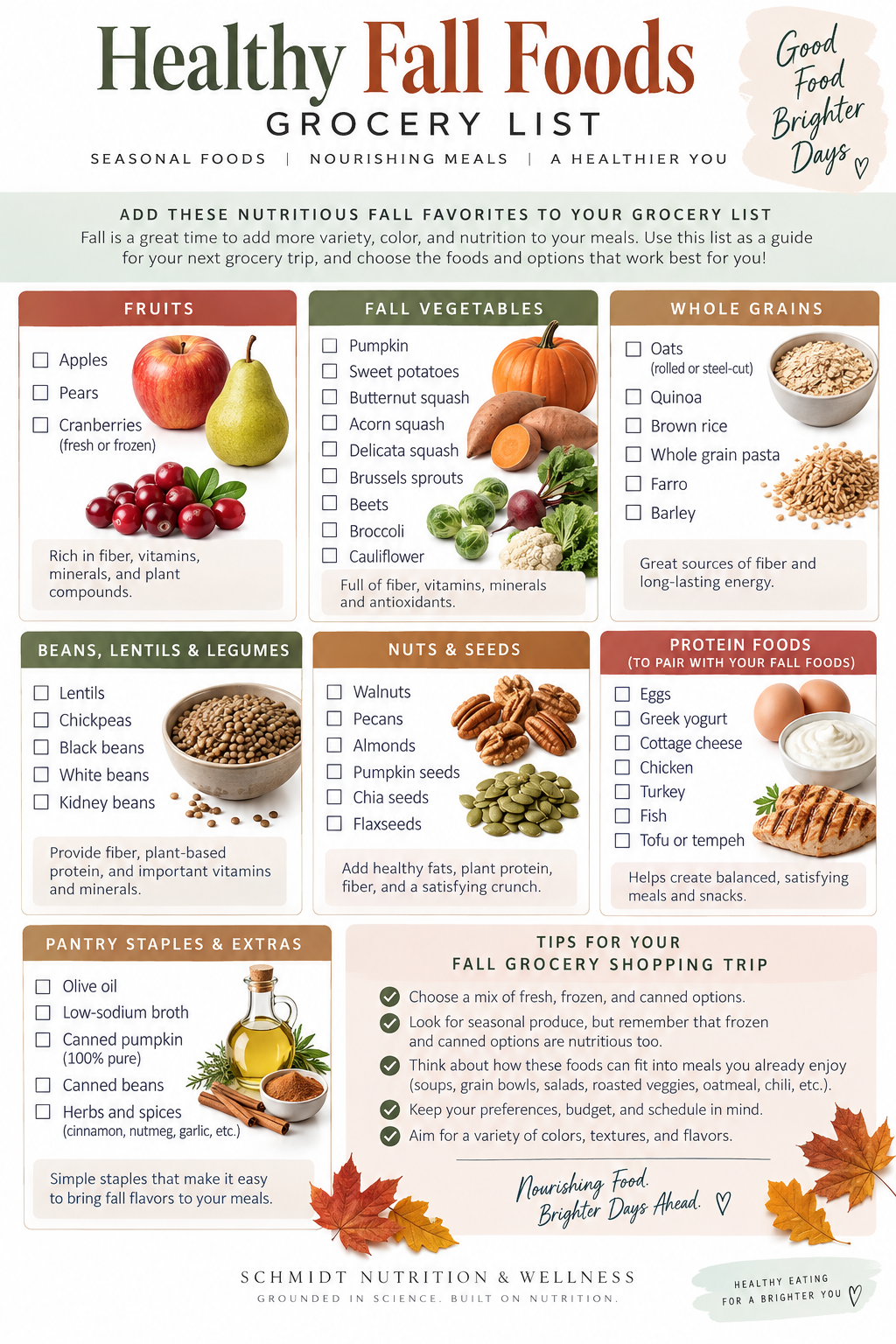
A healthy grocery list doesn't have to be complicated. Aim for a mixture of produce, protein, whole grains or other fiber-rich carbohydrates, and healthy fats that you actually enjoy eating.
Seasonal Eating Doesn't Have to Be Perfect
Eating well isn't about finding the "healthiest" food or eating perfectly.
Instead, focus on building a dietary pattern that provides variety, adequate nutrition, and foods you enjoy.
Research consistently supports the bigger picture: diets containing more fruits and vegetables are associated with better cardiovascular health and lower risk of premature mortality (Aune et al., 2017).
Fall simply gives us another opportunity to add different foods to that pattern.
So grab the apples. Roast the squash. Make the chili. Add pumpkin to your oatmeal.
Healthy eating can, and should, still taste like fall.
References
Aune, D., Giovannucci, E., Boffetta, P., Fadnes, L. T., Keum, N., Norat, T., Greenwood, D. C., Riboli, E., Vatten, L. J., & Tonstad, S. (2017). Fruit and vegetable intake and the risk of cardiovascular disease, total cancer and all-cause mortality—A systematic review and dose-response meta-analysis of prospective studies. International Journal of Epidemiology, 46(3), 1029–1056. https://doi.org/10.1093/ije/dyw319
Connolly, E. L., Sim, M., Travica, N., Marx, W., Beasy, G., Lynch, G. S., Bondonno, C. P., Lewis, J. R., Hodgson, J. M., & Blekkenhorst, L. C. (2021). Glucosinolates from cruciferous vegetables and their potential role in chronic disease: Investigating the preclinical and clinical evidence. Frontiers in Pharmacology, 12, 767975. https://doi.org/10.3389/fphar.2021.767975
Reynolds, A., Mann, J., Cummings, J., Winter, N., Mete, E., & Te Morenga, L. (2019). Carbohydrate quality and human health: A series of systematic reviews and meta-analyses. The Lancet, 393(10170), 434–445. https://doi.org/10.1016/S0140-6736(18)31809-9
Williams, G., Stothart, C. I., Hahn, D., Stephens, J. H., Craig, J. C., & Hodson, E. M. (2023). Cranberries for preventing urinary tract infections. Cochrane Database of Systematic Reviews, 2023(11), CD001321. https://doi.org/10.1002/14651858.CD001321.pub7
