7 Healthy Slow-Cooker Meals for Fall: Easy & Nutritious Recipes
As the weather gets cooler and the days get shorter, there is something especially comforting about coming home to a warm meal that has been simmering all day.
The slow cooker can also be one of the easiest tools for making nutritious meals without spending hours in the kitchen. Add your ingredients, turn it on, and let it do most of the work.
But a slow-cooker meal doesn't have to mean a heavy casserole or cream-based soup. With a few simple ingredients, you can build meals that provide protein, fiber-rich carbohydrates, vegetables, and healthy fats while still delivering all the cozy flavors we associate with fall.
Here is how to build a healthier slow-cooker meal, plus several ideas to add to your fall rotation.
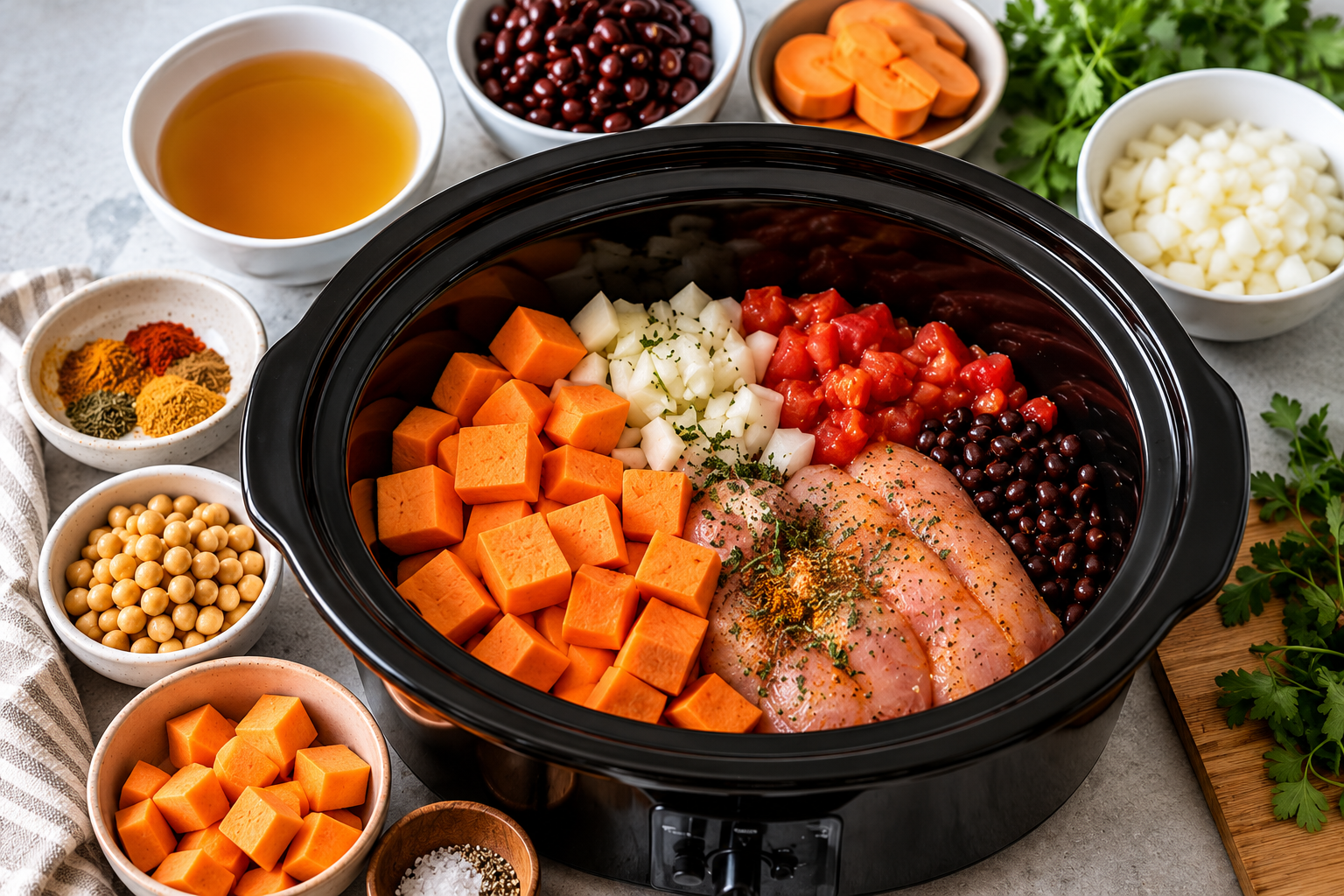
Why Slow-Cooker Meals Can Be a Great Option
One of the biggest benefits of slow-cooker meals isn't a special nutritional property of the appliance itself.
It's convenience.
Healthy eating becomes much easier when nutritious food is actually available when you're hungry. Slow cookers allow you to prepare a meal earlier in the day, or even prep the ingredients the night before, so dinner requires very little work.
They also work particularly well with foods commonly recommended as part of health-promoting dietary patterns, including:
Vegetables
Beans and lentils
Whole grains
Lean meats and poultry
Minimally processed plant proteins
Herbs and spices
Research examining healthy dietary patterns consistently finds an emphasis on vegetables, fruits, legumes, nuts, whole grains, and minimally processed protein foods. Rather than focusing on one individual "superfood," overall dietary patterns appear to matter most for long-term health.
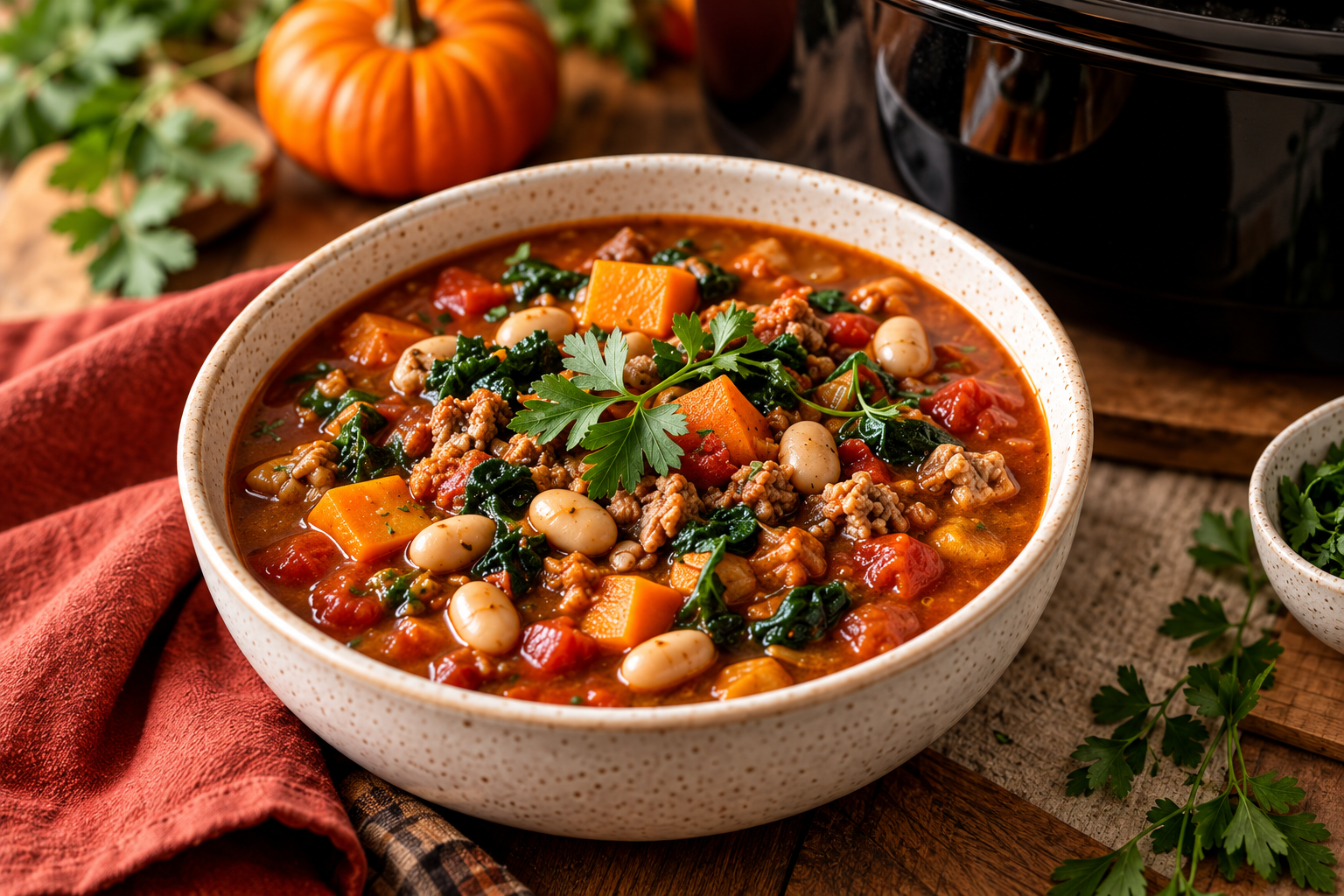
What About Nutrient Loss From Slow Cooking?
Cooking can change the nutrient content of vegetables, particularly heat-sensitive and water-soluble vitamins such as vitamin C and some B vitamins.
However, that doesn't mean cooked vegetables aren't nutritious.
An important advantage of soups, stews, and other slow-cooker meals is that the cooking liquid is usually eaten rather than discarded. Some nutrients that leach into the liquid during cooking therefore remain part of the meal.
Research also shows that cooking can sometimes improve the accessibility of certain compounds, including some carotenoids.
The takeaway?
Raw versus cooked doesn't have to be an either/or decision. Eating a variety of vegetables prepared in different ways is a practical way to get the benefits of both.
The Formula for a Balanced Slow-Cooker Meal
You don't necessarily need a complicated recipe to make a nutritious slow-cooker dinner.
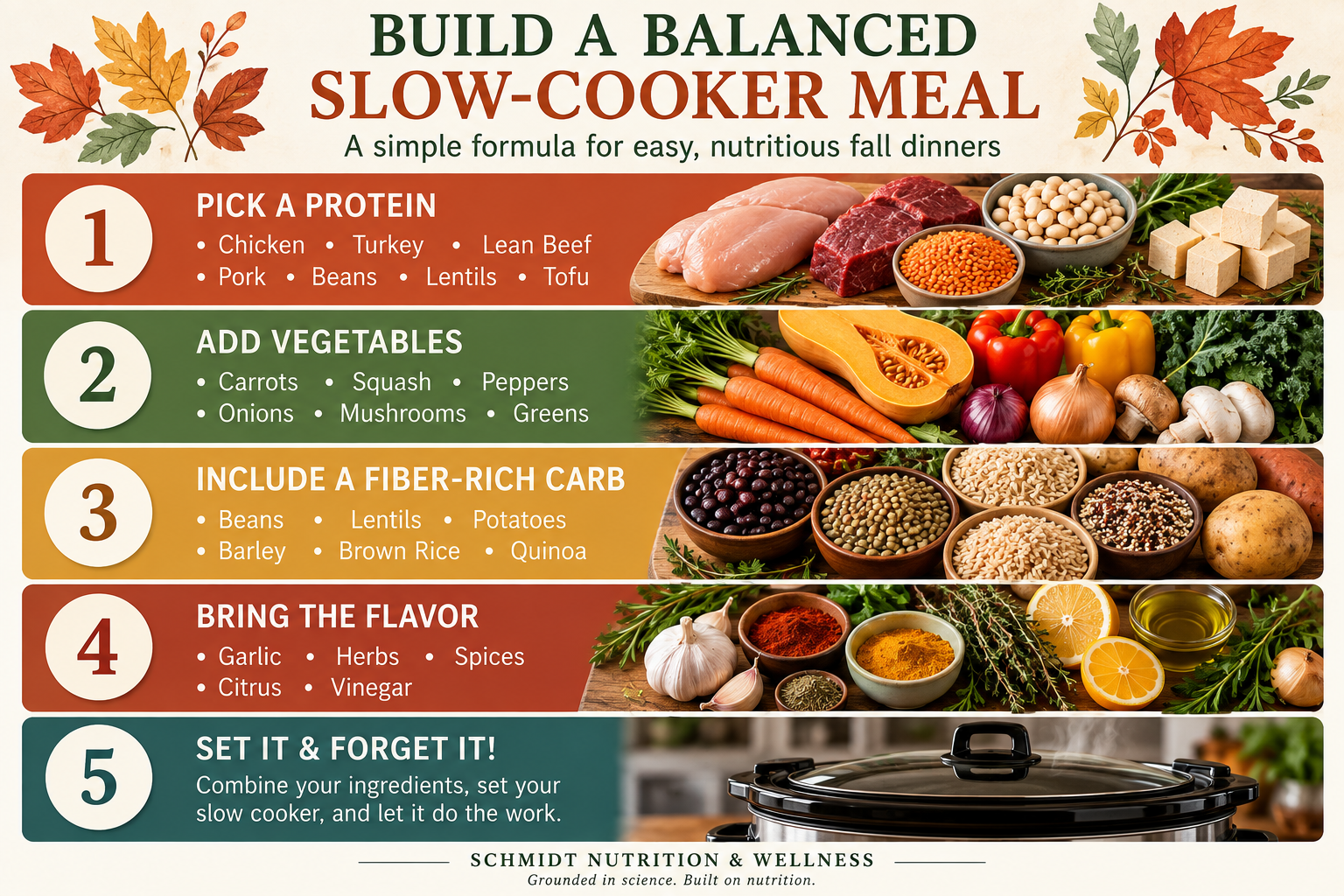
Try thinking about your meal in four parts:
1. Start With Protein
Protein can help support muscle maintenance, recovery, and fullness.
Slow-cooker-friendly options include:
Chicken breast or thighs
Turkey
Lean beef
Pork tenderloin
Lentils
Chickpeas
Black beans
Kidney beans
White beans
Tofu
For people who struggle to eat enough protein during the day, building dinner around a meaningful protein source can make reaching daily needs much easier.
2. Add Plenty of Vegetables
This is where slow-cooker meals really shine.
Try adding several different vegetables rather than relying on just one.
Fall-friendly choices include:
Carrots
Sweet potatoes
Butternut squash
Pumpkin
Onions
Celery
Mushrooms
Bell peppers
Tomatoes
Kale
Spinach
Cabbage
Frozen vegetables work, too.
Nutrition doesn't require everything to be fresh from the farmers market. Frozen and low-sodium canned vegetables can be convenient and nutritious options.
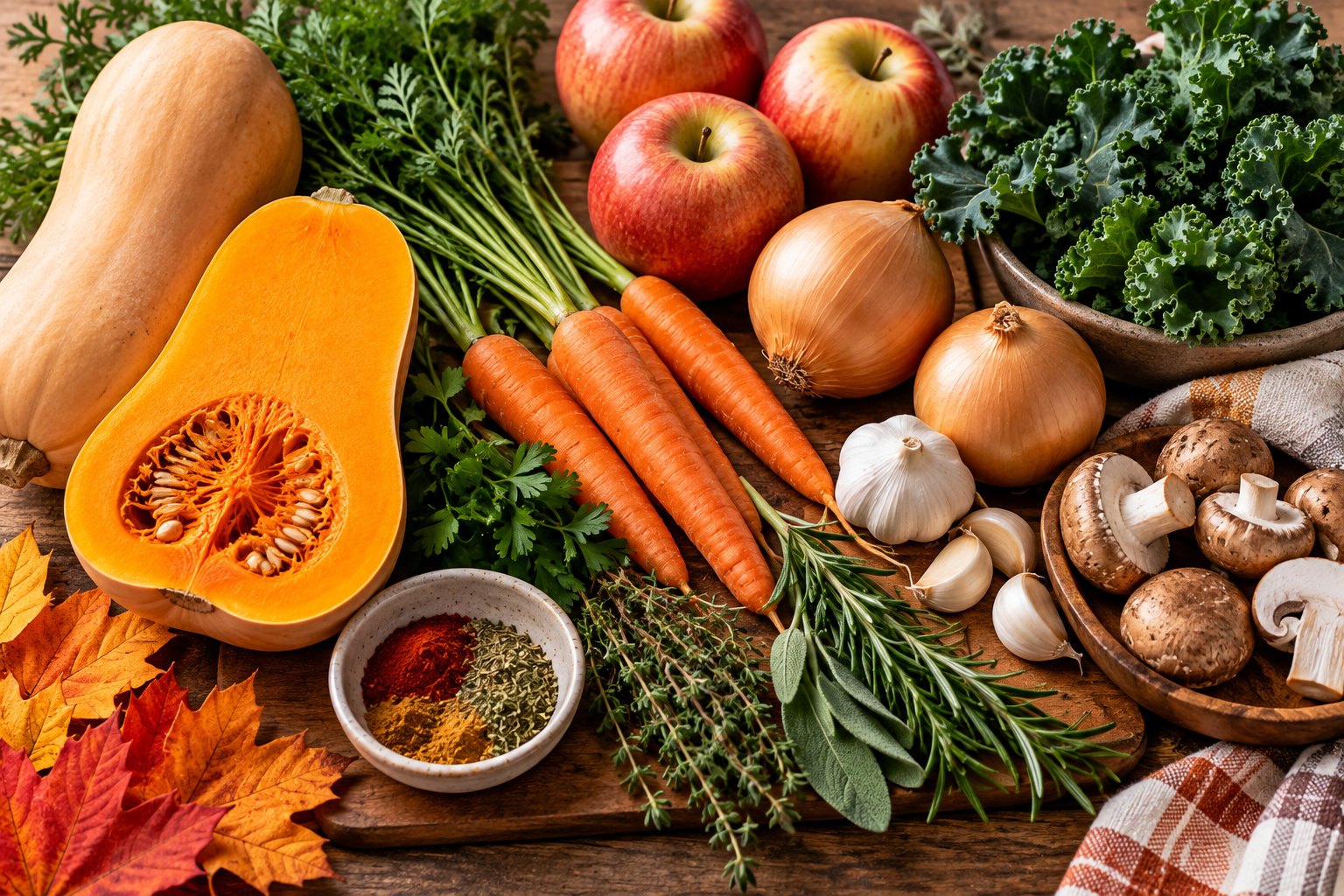
3. Include a Fiber-Rich Carbohydrate
Carbohydrates provide energy, while fiber-rich carbohydrate sources can contribute to fullness, digestive health, and overall diet quality.
Try:
Beans
Lentils
Potatoes
Sweet potatoes
Barley
Brown rice
Quinoa
Farro
Whole-grain pasta
Corn
Research examining whole grains has found greater fullness and satiety compared with refined grains, making them another useful addition to balanced meals.
4. Add Flavor
A nutritious meal doesn't need to taste bland.
Experiment with:
Garlic
Rosemary
Thyme
Sage
Smoked paprika
Cumin
Chili powder
Curry powder
Ginger
Cinnamon
Red pepper flakes
Lemon or lime juice
Vinegar
Fresh herbs
Herbs, spices, citrus, and vinegar are also useful ways to build flavor without relying entirely on salt.
7 Healthy Slow-Cooker Meals for Fall
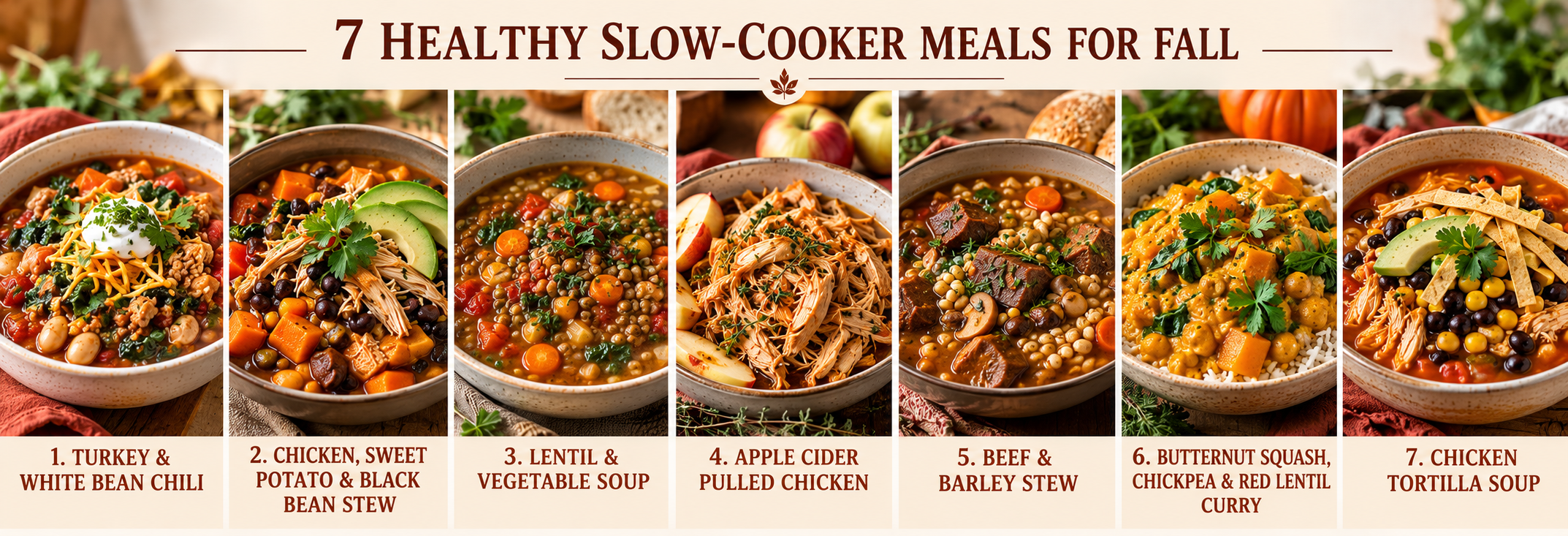
1. Slow-Cooker Turkey & White Bean Chili
This is a great option when you want something hearty without making an especially heavy meal.
Add to your slow cooker:
1 pound lean ground turkey, browned
2 cans cannellini or great northern beans, drained and rinsed
1 onion, diced
2 bell peppers, chopped
1 can diced tomatoes
2 cups low-sodium chicken broth
2 cloves garlic
1 teaspoon cumin
1 teaspoon smoked paprika
1 teaspoon chili powder
Salt and pepper to taste
Cook on LOW for approximately 6–7 hours or HIGH for 3–4 hours.
Stir in spinach or kale toward the end of cooking.
Why I Like It
Turkey provides protein while beans contribute additional protein and fiber.
Pulses (edible inside part of beans)…including beans, chickpeas, peas, and lentils are particularly useful additions to slow-cooker meals. A systematic review and meta-analysis of controlled feeding trials found that dietary pulses increased short-term feelings of fullness compared with control foods.
Serve the chili with avocado, plain Greek yogurt, cilantro, or a small amount of shredded cheese.
2. Chicken, Sweet Potato & Black Bean Stew
For a slightly sweet-and-savory fall combination, try:
1½ pounds boneless skinless chicken
2 medium sweet potatoes, cubed
1 can black beans, rinsed
1 can diced tomatoes
1 onion
1 bell pepper
2 cups low-sodium chicken broth
1 teaspoon cumin
1 teaspoon smoked paprika
½ teaspoon chili powder
Garlic to taste
Cook on LOW for approximately 6–7 hours or until the chicken reaches a safe internal temperature.
Shred the chicken before serving.
Top with cilantro, avocado, lime juice, or Greek yogurt.
Nutrition win: You're getting protein from the chicken and beans, fiber-rich carbohydrates from the beans and sweet potatoes, and several servings of vegetables in one bowl.
3. Slow-Cooker Lentil & Vegetable Soup
You don't need meat to build a filling slow-cooker meal.
Combine:
1½ cups dry lentils, rinsed
3 carrots
3 celery stalks
1 onion
1 zucchini
1 can diced tomatoes
6 cups low-sodium vegetable broth
Garlic
Thyme
Rosemary
Black pepper
Cook on LOW for 6–8 hours until the lentils are tender.
Add chopped kale or spinach during the last 20–30 minutes.
For additional energy and texture, serve with whole-grain bread or add barley to the soup.
Why Lentils?
Lentils provide a combination of plant protein, complex carbohydrates, fiber, iron, folate, potassium, and other nutrients.
Meta-analyses of randomized trials have also found improvements in some cardiometabolic risk markers, including LDL cholesterol and fasting glucose, with increased legume intake, although the strength and consistency of the evidence varies across outcomes.
In other words: lentils don't need to be marketed as a miracle food. They're simply a nutritious, affordable food worth eating more often.
4. Apple Cider Pulled Chicken
Apples aren't just for dessert.
Try this savory fall combination:
1½–2 pounds chicken breast or thighs
1 onion, sliced
1 apple, sliced
¾ cup unsweetened apple cider
1 tablespoon Dijon mustard
1 tablespoon apple cider vinegar
Garlic
Thyme
Black pepper
Cook on LOW for 6–7 hours, then shred.
Serve with roasted Brussels sprouts or green beans and a baked potato, mashed potatoes, brown rice, or another whole grain.
This is also an easy meal-prep protein for sandwiches and grain bowls later in the week.
5. Slow-Cooker Beef & Barley Stew
Classic beef stew can absolutely fit into a balanced eating pattern.
Try:
1½ pounds lean stew beef
¾ cup pearl barley
Carrots
Celery
Mushrooms
Onion
Garlic
1 can diced tomatoes
Low-sodium beef broth
Thyme
Rosemary
Black pepper
Cook on LOW for approximately 7–8 hours, or until the beef and barley are tender.
The combination of beef, barley, and vegetables provides protein, carbohydrates, fiber, iron, zinc, and several other micronutrients.
If you're trying to increase vegetables, don't be shy with them. Stews are one of the easiest places to add an extra carrot, handful of mushrooms, or serving of greens without creating another side dish.
6. Butternut Squash, Chickpea & Red Lentil Curry
For a plant-forward option, combine:
1 small butternut squash, cubed
1 can chickpeas, rinsed
1 cup red lentils
1 onion
1 can diced tomatoes
1 can light coconut milk
2 cups low-sodium vegetable broth
Curry powder
Turmeric
Ginger
Garlic
Cook on LOW for 6–7 hours.
Stir in spinach toward the end.
Serve alone or over brown rice or quinoa.
For even more protein, you could add tofu or edamame.
This is also a good reminder that healthy eating doesn't have to mean chicken, broccoli, and rice every night. Herbs, spices, legumes, vegetables, and cuisines from around the world can make nutritious eating far more interesting.
7. Slow-Cooker Chicken Tortilla Soup
Combine:
1½ pounds chicken breast or thighs
1 can black beans, rinsed
1 cup corn
1 can diced tomatoes
1 bell pepper
1 onion
4 cups low-sodium chicken broth
Garlic
Cumin
Chili powder
Smoked paprika
Cook on LOW for approximately 6 hours, then shred the chicken.
Top with:
Avocado
Plain Greek yogurt
Cilantro
Lime
Crushed tortilla chips
Shredded cheese
Instead of thinking of toppings as "good" or "bad," choose the ones you enjoy and build a meal that is both satisfying and nutritious.
Want Your Slow-Cooker Meal to Keep You Fuller?
Soup isn't automatically filling just because it contains vegetables.
A broth containing a few carrots and celery stalks might technically be vegetable soup, but it may not provide enough protein, energy, or fiber to function as a satisfying meal.
Instead, ask:
Where is my protein?
Where is my fiber?
Do I have enough carbohydrate to support my energy needs?
Did I include vegetables?
Research on pulses suggests that beans, lentils, chickpeas, and peas can increase short-term satiety. Whole grains have similarly demonstrated favorable effects on hunger and fullness compared with refined grains in randomized controlled trials.
Interestingly, observational research has also found an association between soup consumption and lower odds of obesity. That does not mean soup causes weight loss, the available research cannot establish that, but it reinforces the idea that nutrient-dense soups can fit comfortably into a health-promoting dietary pattern.
A Note About Sodium
Soups, chili, and stews can become surprisingly high in sodium when several packaged ingredients are combined.
For example, a recipe might contain:
Broth
Canned tomatoes
Canned beans
Seasoning packets
Cheese
Added salt
Individually, those ingredients may not seem concerning, but sodium can add up.
You don't need to eliminate canned foods to solve this.
Instead:
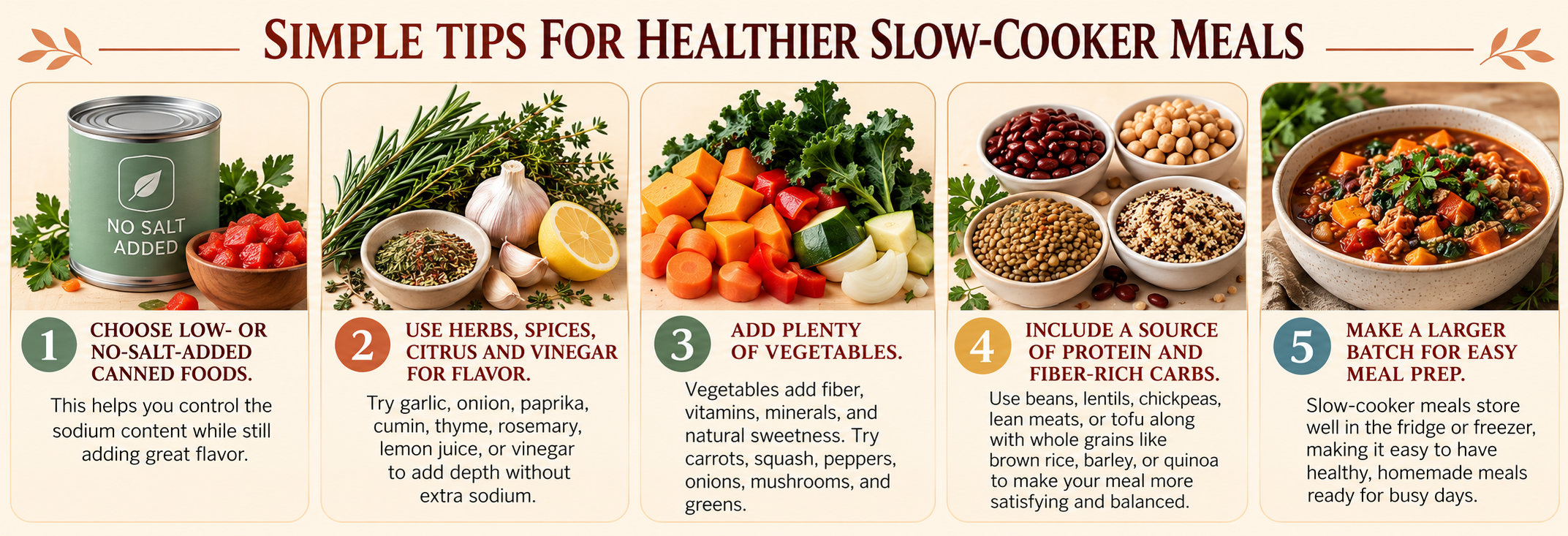
Choose low- or no-salt-added broth and tomatoes when available.
Drain and rinse canned beans.
Use herbs, spices, garlic, citrus, and vinegar for additional flavor.
Then season to taste.
Make Your Slow Cooker Work for Meal Prep
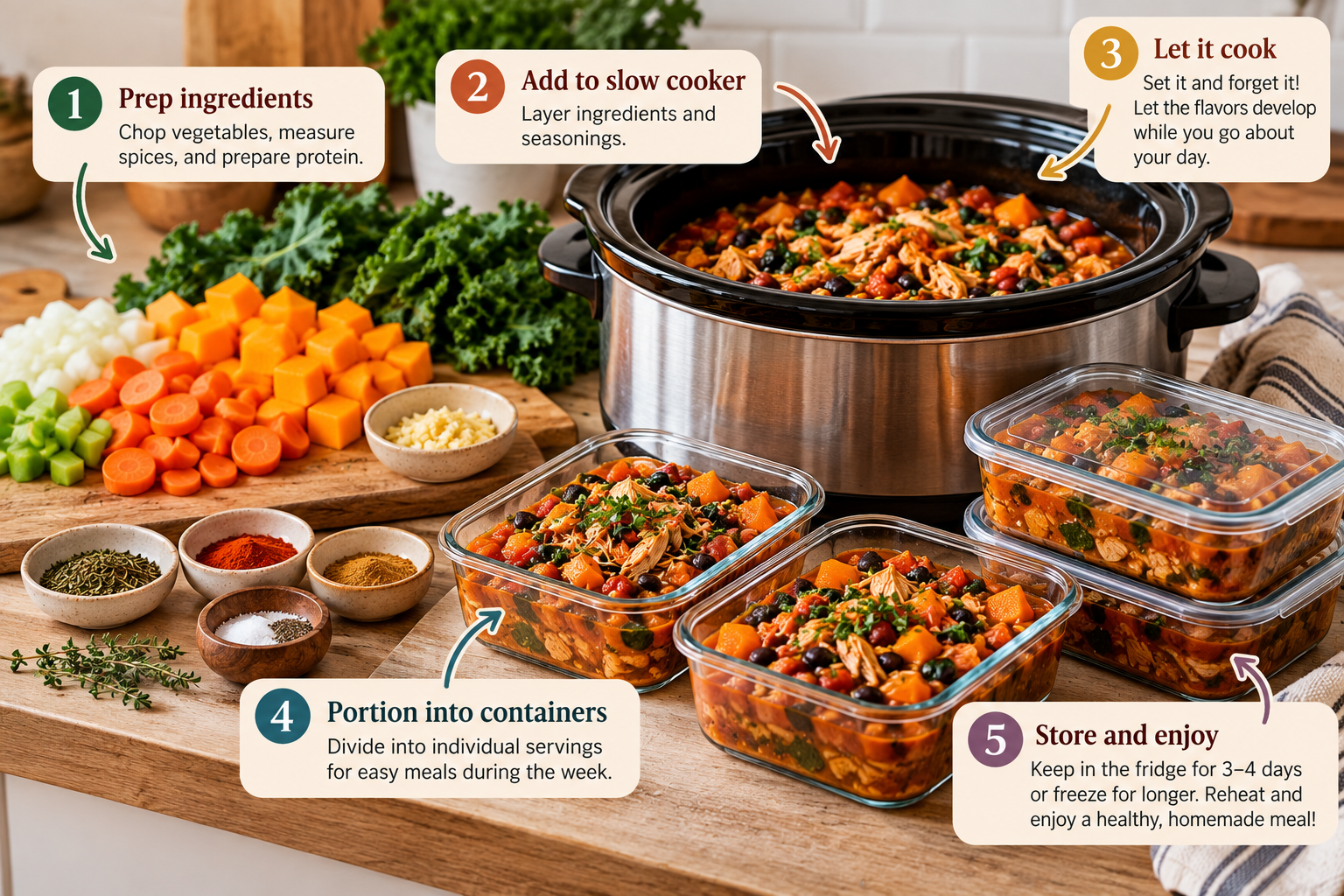
One of my favorite things about slow-cooker recipes is that you're already cooking a large quantity of food.
Use that to your advantage.
Portion leftovers into individual containers for lunches, or freeze extra portions for future dinners.
You can also prepare freezer bags containing the uncooked ingredients for certain recipes. Freeze them, thaw safely in the refrigerator when you're ready to use them, and transfer the ingredients to the slow cooker.
Important food-safety note: Don't put frozen meat directly into a slow cooker. Thaw meat or poultry safely in the refrigerator before slow cooking so that it can reach a safe cooking temperature appropriately.
Healthy Eating Doesn't Have to Mean More Work
There is a misconception that eating well requires preparing elaborate meals every night.
It doesn't.
Sometimes a nutritious dinner is chicken, vegetables, beans, and spices that you threw into a slow cooker before work.
Sometimes it's leftovers.
Sometimes it's soup you made three weeks ago and pulled out of the freezer.
A sustainable eating pattern needs to work on busy Tuesdays just as much as it works when you have two hours to cook on a Sunday.
Slow-cooker meals can make that easier.
This fall, focus less on making your meals "perfect" and more on building meals that contain a protein source, fiber-rich carbohydrate, vegetables, and foods you genuinely enjoy eating.
Because the best nutrition plan isn't the one that looks perfect on paper.
It's the one that actually works in your life.
References
Ferreira, H., Vasconcelos, M., Gil, A. M., & Pinto, E. (2023). Benefits of pulse consumption on metabolism and health: A systematic review of randomized controlled trials. Critical Reviews in Food Science and Nutrition.
Kim, J. E., Ferruzzi, M. G., Campbell, W. W., et al. (2021). Effects of whole grain intake, compared with refined grain, on appetite and energy intake: A systematic review and meta-analysis. Advances in Nutrition, 12(4), 1177–1195.
Kuroda, M., Ohta, M., Okufuji, T., et al. (2020). Association between soup consumption and obesity: A systematic review with meta-analysis. Physiology & Behavior, 225, 113074.
Li, S. S., Kendall, C. W. C., de Souza, R. J., et al. (2014). Dietary pulses, satiety and food intake: A systematic review and meta-analysis of acute feeding trials. Obesity, 22(8), 1773–1780.
Mullins, A. P., & Arjmandi, B. H. (2021). Health benefits of plant-based nutrition: Focus on beans in cardiometabolic diseases. Nutrients, 13(2), 519.
Nádasdi, A., et al. (2023). Legume consumption in adults and risk of cardiovascular disease and type 2 diabetes: A systematic review and meta-analysis. Food & Nutrition Research.
Palermo, M., Pellegrini, N., & Fogliano, V. (2014). The effect of cooking on the phytochemical content of vegetables. Journal of the Science of Food and Agriculture, 94(6), 1057–1070.
World Health Organization. (2025). Healthy diet. World Health Organization.
